
Lightning protection on industrial buildings is one of those topics that sits unnoticed until something fails, and then becomes the first thing the insurance adjuster asks about. The Polish adoption of IEC 62305, PN-EN 62305, structures the work into four parts: general principles, risk management, physical damage and protection of structures, and protection of electronic systems.
The four parts of PN-EN 62305
Part 1: General principles
Foundational concepts, what a lightning protection system (LPS) is, what risk it manages, what damage modes it addresses.
Part 2: Risk management
The risk assessment is where every project starts. It quantifies probability of strikes given location, structure characteristics and surroundings, and matches that against acceptable risk thresholds. The output: which LPS protection level (LPL I through IV) the structure requires.
Part 3: Physical damage and structure protection
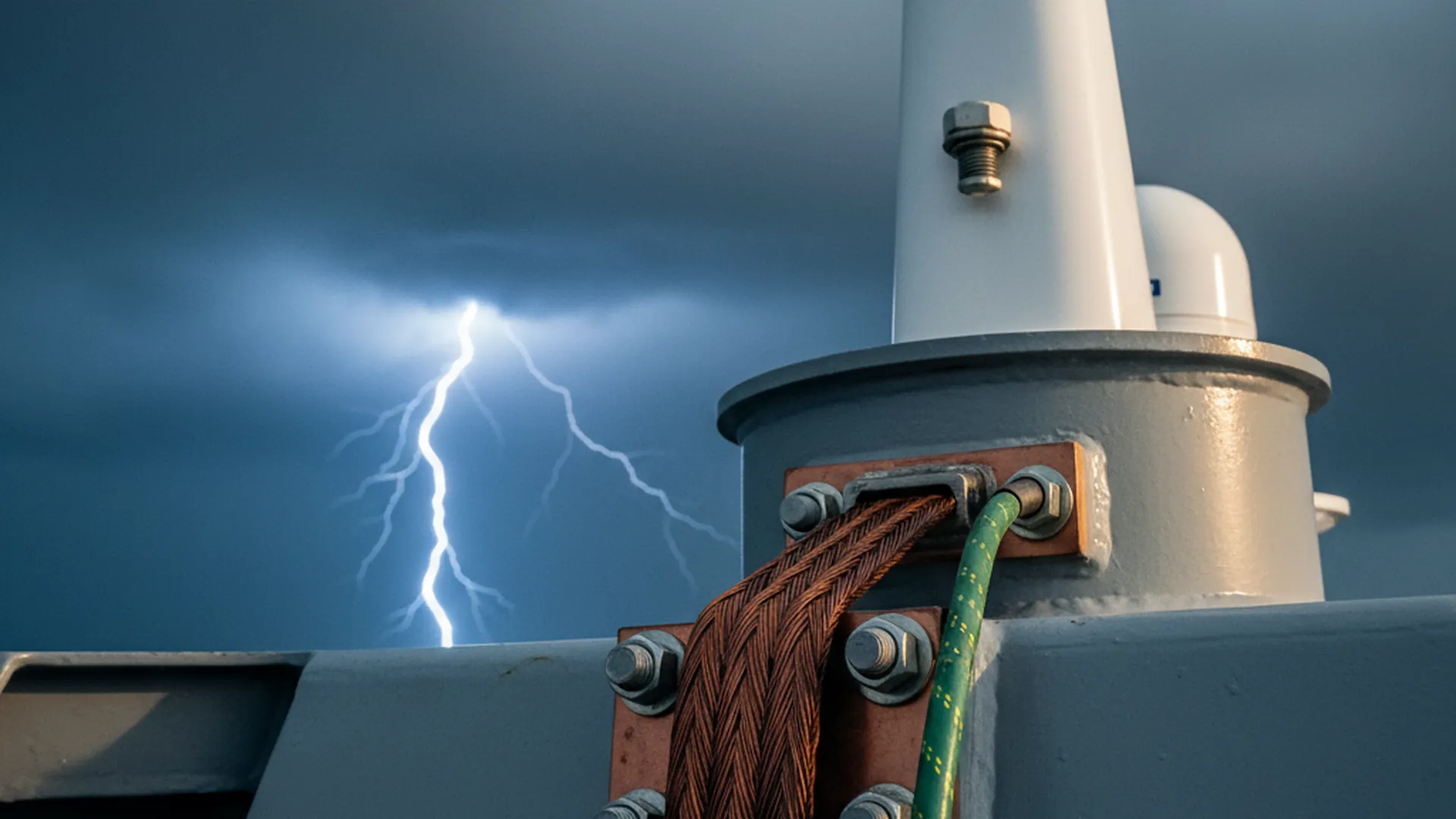
The external system, air termination network (rods, mesh, catenary wires), down conductors and earth termination. Plus structural elements like equipotential bonding bars and lightning equipotential bonding inside the structure.
Part 4: Protection of electronic systems
Surge protective devices (SPDs), zone coupling, internal shielding. This is the part that protects connected equipment after a strike has reached the building.
What a complete system actually includes
- Risk assessment under PN-EN 62305-2, with documented LPL classification
- External LPS: air termination, down conductors, earth termination
- Internal LPS: equipotential bonding, SPDs at boundary and at sensitive equipment
- Acceptance documentation that the relevant authority can accept on first review
For industrial buildings, the cost difference between a competent and a marginal LPS install is small. The cost difference at the moment a strike happens is enormous.
RS Marine Sp. z o.o. delivers hull construction, refit and repair, industrial HVAC and electrical installations from Gdynia, Poland. Operating since 2018 with IACS-affiliated welders and a team of over 100 specialists.