
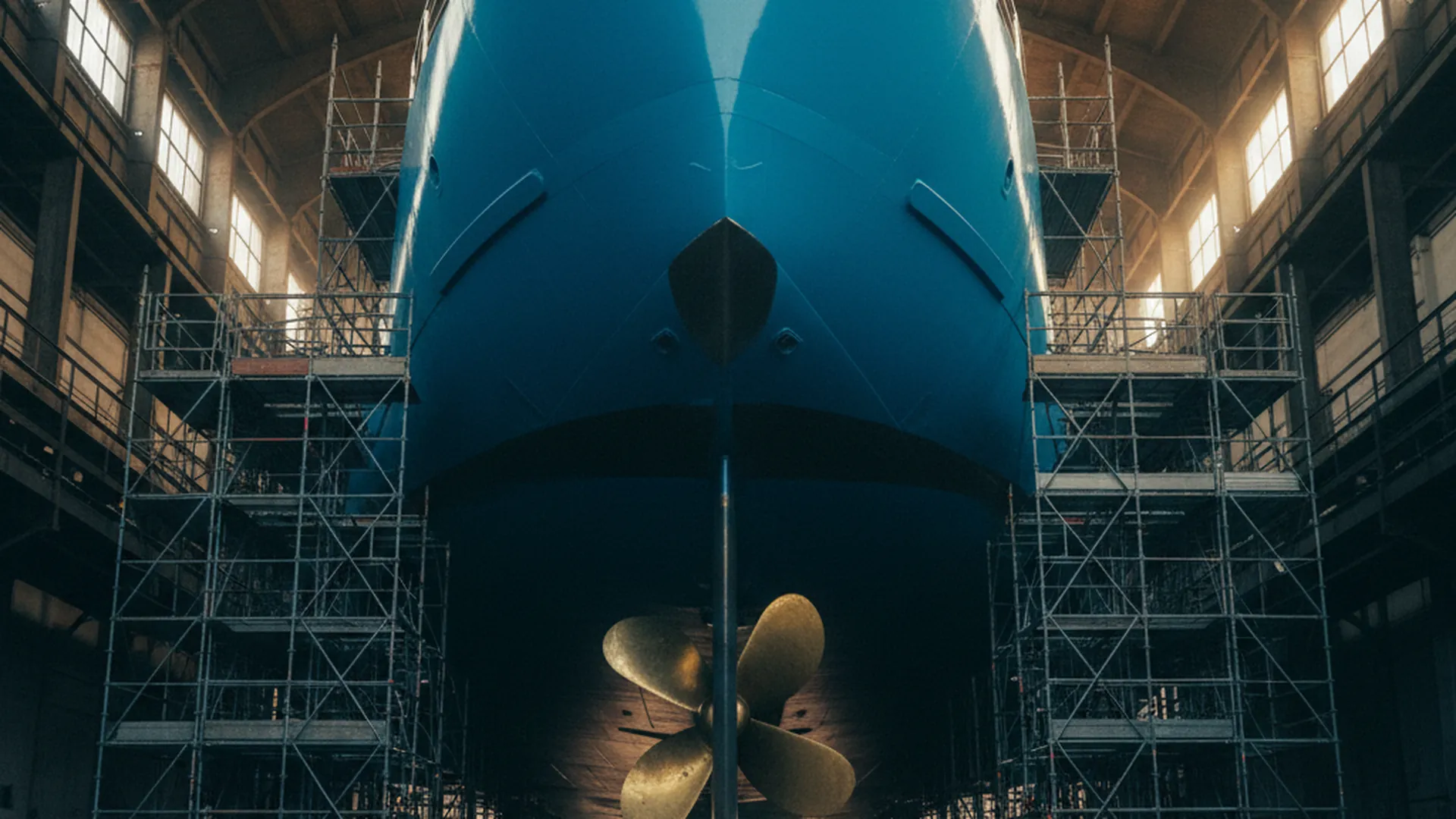

A vessel comes off charter for a yard stay. The shipyard quote arrives with line items spread across the categories repair and refit, sometimes combined into one figure. For an owner deciding whether to commit, the distinction is not semantic. Repair restores a vessel to its previous condition. Refit upgrades or modifies it. The two trigger different class procedures, different documentation packages and different amortisation logic.
The substance of repair
Repair work brings the vessel back to its as-built condition, or to the condition it should be in under its current class regime. Steel renewal where corrosion has reduced plate thickness below class margin. Replacement of failed bearings, seals, gaskets. Restoration of HVAC capacity that has degraded. The output is a vessel that meets its original specification, not a better one.
The substance of refit
Refit changes the vessel. Conversion from heavy-fuel to dual-fuel or LNG operation. Addition of scrubber systems. Battery hybridisation. Cabin reconfiguration on a passenger vessel. Bridge electronics modernisation. These touch the vessel's specification, trigger new class approvals and shift the asset's commercial profile, sometimes substantially.
Class consequences
Repair work goes through the surveyor as a like-for-like or in-kind restoration. Documentation is comparatively light: scope definition, material certificates, weld maps if structural, NDT logs, sign-off. Refit work goes through plan approval first. New drawings, new calculations, new equipment certificates and a formal class change notation if the vessel's capability envelope shifts. The documentation package is larger and the timeline is longer.
Economic logic
Repair is an operational expense in most accounting regimes. Refit is a capital expense, amortised against the vessel's remaining useful life. For an owner with a vessel ten years from end-of-life, a heavy refit may not earn back over that horizon. For an owner with a vessel just past midlife on a regulated trade lane (an emission-control area, a class change forced by IMO), a refit can extend useful life by another decade. The numbers decide.
A mixed scope is the norm
- Pure repair: under one month yard time typically, light documentation, in-kind class submission
- Pure refit: three to nine months, formal plan approval, new class notation
- Mixed scope (most yard stays): both pathways run in parallel, separated in the project plan and the documentation file
How RS Marine handles it
Our work spans both pathways. Steel repair work at NAUTA, structural renewal under class scrutiny, ageing vessels brought back to specification. Refit work at DAMEN and through Muehlhan Polska, where the vessel comes out specified differently from how it came in. The discipline is the same: scope clarity, class-ready documentation, no surprises at handover. We help owners distinguish the line items in a quote before signing, not after.
RS Marine Sp. z o.o. delivers hull construction, refit and repair, industrial HVAC and electrical installations from Gdynia, Poland. Operating since 2018 with IACS-affiliated welders and a team of over 100 specialists.